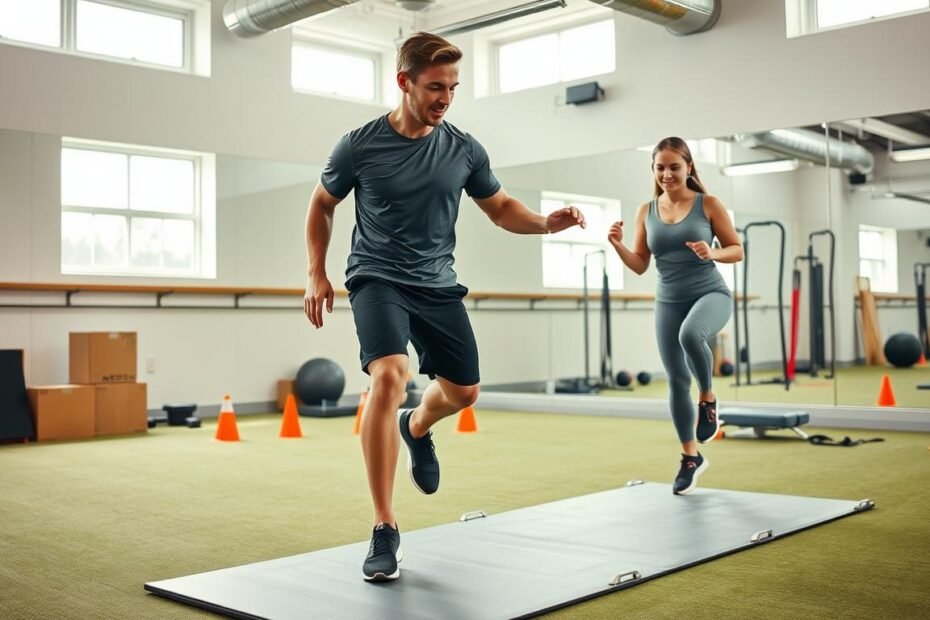
Imagine you’ve just completed your ACL reconstruction surgery. You feel a mix of relief and anxiety as you begin your journey toward recovery. You know that your rehabilitation will be crucial in ensuring a successful return to your favorite sports. One of the most effective tools in your ACL rehab toolkit is progressive plyometric training. This approach not only enhances your recovery but also significantly reduces the risk of a secondary graft tear.
During your ACL rehabilitation, you’ll go through various healing phases. Each phase is vital for your anterior cruciate ligament recovery. Incorporating plyometric exercises at the right time can help restore your neuromuscular function and improve your movement quality. A well-structured progressive plyometric program respects these healing phases while challenging your body to adapt safely. Understanding this connection will empower you to embrace plyometrics as a cornerstone of your ACL rehab strategy.
Key Takeaways
- Progressive plyometric training is essential for ACL rehab.
- It helps reduce the risk of secondary graft tears.
- Plyometrics enhance neuromuscular function.
- Incorporating plyometric exercises improves movement quality.
- Understanding healing phases is crucial for recovery.
- A structured program respects biological healing while challenging the body.
How does progressive plyometric training enhance ACL rehab outcomes?
Progressive plyometric training plays a crucial role in enhancing your ACL rehab outcomes. This training method focuses on improving explosive strength, neuromuscular control, and overall movement quality. Understanding how plyometrics fit into your recovery plan can help you regain knee stability and protect your graft.
Understanding the role of plyometrics in ACL rehab
Plyometric exercises utilize the stretch-shortening cycle, which is vital for developing power and speed. This cycle involves stretching a muscle before contracting it, leading to greater force production. In ACL rehab, plyometrics can:
- Improve explosive strength
- Enhance neuromuscular coordination
- Restore motor control
These benefits surpass traditional resistance training, making plyometrics a key component of effective ACL physical therapy.
Key benefits of integrating plyometrics into your ACL rehab plan
Incorporating plyometric exercises into your ACL rehab plan offers several advantages:
- Improved movement symmetry
- Reduced risk of injury
- Optimized readiness for return to sport
By following a progressive plyometric program tailored to your recovery stage, you can strengthen your knee and enhance functional performance. This approach significantly lowers the chance of secondary graft tears, ensuring a smoother transition back to your active lifestyle.
What are the specific risks of graft tears in ACL rehab?
Understanding the risks of graft tears during your ACL rehab is essential for a successful recovery. Many individuals face a high risk of re-injury within two years after ACL surgery recovery. This risk often stems from several factors that can affect your rehabilitation process.
Identifying primary causes of secondary graft tears
Several primary causes contribute to secondary graft tears during ACL rehab:
- Muscle weakness: Insufficient strength in the surrounding muscles can lead to instability.
- Movement asymmetries: Differences in how you move can increase stress on the graft.
- Poor neuromuscular control: Lack of coordination can result in improper movements.
Importance of thorough assessment during ACL rehab
A comprehensive assessment is vital during your ACL rehab. Regular evaluations help identify potential risks early on. Consider these key assessment methods:
- Strength testing: Measures muscle power and identifies weaknesses.
- Functional movement analysis: Evaluates how well you perform specific movements.
- Biomechanical evaluation: Analyzes your movement patterns for asymmetries.
By working closely with your rehabilitation team, you can tailor your post-ACL injury exercises to address these risks. This proactive approach minimizes the likelihood of graft failure and supports a safe recovery.
How can you effectively implement plyometric exercises in your ACL rehab?
Implementing plyometric exercises in your ACL rehab can enhance your recovery process. These exercises help rebuild strength and improve your overall function. Following a structured ACL rehabilitation protocol ensures that you progress safely through your recovery timeline. Below are recommended exercises and tips for monitoring your progress.
Recommended progressive plyometric exercises for ACL rehab
Start with basic exercises and gradually increase the intensity. Here are some effective plyometric exercises:
- Double-leg low-impact jumps
- Single-leg balance jumps
- Box jumps
- Single-leg bounding drills
- Lateral hops
Each of these exercises targets different aspects of strength and stability. Begin with low-impact variations to avoid stress on your graft. As you gain confidence and strength, you can move to more advanced drills.
Monitoring your progress during ACL rehab with plyometrics
Monitoring your progress is crucial in your ACL rehab. Keep track of the following:
- Pain levels during and after exercises
- Swelling in the knee
- Movement quality and form
- Functional performance benchmarks
Regular assessments will help you adjust your ACL rehabilitation protocol. Focus on maintaining proper form to minimize the risk of secondary graft tears. This careful monitoring will support a smoother ACL recovery timeline.
Why is continuous evaluation crucial in your ACL rehab journey?
Continuous evaluation is essential in your ACL rehab journey. It allows you to adjust your rehab program based on performance and recovery status. Regularly assessing your strength, movement quality, and pain levels ensures that your post-ACL injury exercises are tailored to your needs. This personalized approach helps prevent overload and promotes sustainable knee function.
As you progress, monitoring key indicators will guide necessary modifications in your ACL strengthening exercises. This ongoing assessment helps you identify areas that need more focus, ensuring that you are safely advancing through your rehab. By keeping track of functional test results, you can better understand your readiness to return to sports.
The long-term benefits of incorporating progressive plyometric training into your ACL rehab are significant. Sustained improvements in knee stability and neuromuscular control can greatly reduce the risk of secondary graft tears. Committing to continuous evaluation and appropriate adjustments will help you optimize your ACL rehab and confidently engage in your desired activities.